McLaren's New Logo Came From the Sign Over a Garage in Auckland
McLaren changed its logo last week. Once I saw where the new lettering came from, I liked it even more.
It's based on the hand-painted "McLaren's" sign over the service station Les and Ruth McLaren ran on Remuera Road in Auckland. Their son Bruce learned to work on cars there. At 14, he rebuilt a 1929 Austin 7 Ulster in the workshop. A year later, he raced it at the Muriwai hillclimb and won his category.
That garage eventually gave its name to one of the most successful teams in Formula 1.
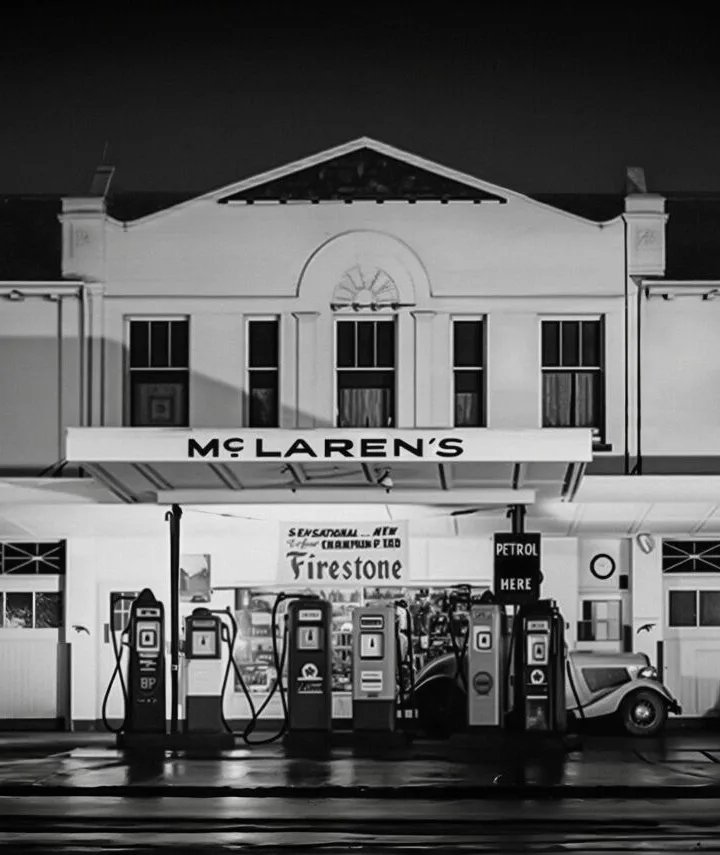
The McLaren family's service station on Remuera Road in Auckland.
The detail McLaren kept from the old sign is the small line under the lowercase "c." The rest of the name is in capitals, and the line lifts the c up to match them. It looks like something a sign painter did by hand, and now it's going across the tail of a supercar.
McLaren's logos have always reflected the era
A friend of Bruce McLaren designed the original kiwi logo in 1963. In the early 1980s, designer Raymond Loewy introduced the chevrons, inspired by the Marlboro branding that appeared on McLaren's race cars at the time. The Speedmark, the red swoosh most people picture when they think of McLaren, arrived in 1997 with West as the sponsor.
This one goes back to the founder. The Speedmark isn't going away, but it's been separated from the name. David Woodhouse, McLaren Automotive's chief creative officer, called it "a little identifier" and said the name "definitely takes dominance." He also described the new identity as "finally an acknowledgement of our founder" after a period of not recognizing him.
The luxury house comparison
Woodhouse named Hermès and Louis Vuitton as the model for how McLaren wants to treat its founder. Both of them still put the founder's name and story at the center of everything they sell.
I understand why McLaren wants that. The brands that hold their value best, whether it's cars, watches or anything else people collect, usually have a real origin you can point to. Ferrari has Enzo in Maranello and Porsche has Ferry and the 356. McLaren had Bruce and a garage in Auckland the whole time, and for most of its road car history it led with carbon fiber and lap times.
McLaren is changing too
The timing is interesting because McLaren itself is in the middle of a major transition. It built around 2,000 cars last year, down from 4,806 in 2018. The GTS, Artura and 750S are all expected to leave production by the end of 2028, and McLaren hasn't announced what replaces them yet. The company has also changed hands and merged since late 2024. Its current owner, L'IMAD in Abu Dhabi, has approved £500 million for a second UK plant and a performance SUV due before 2030.
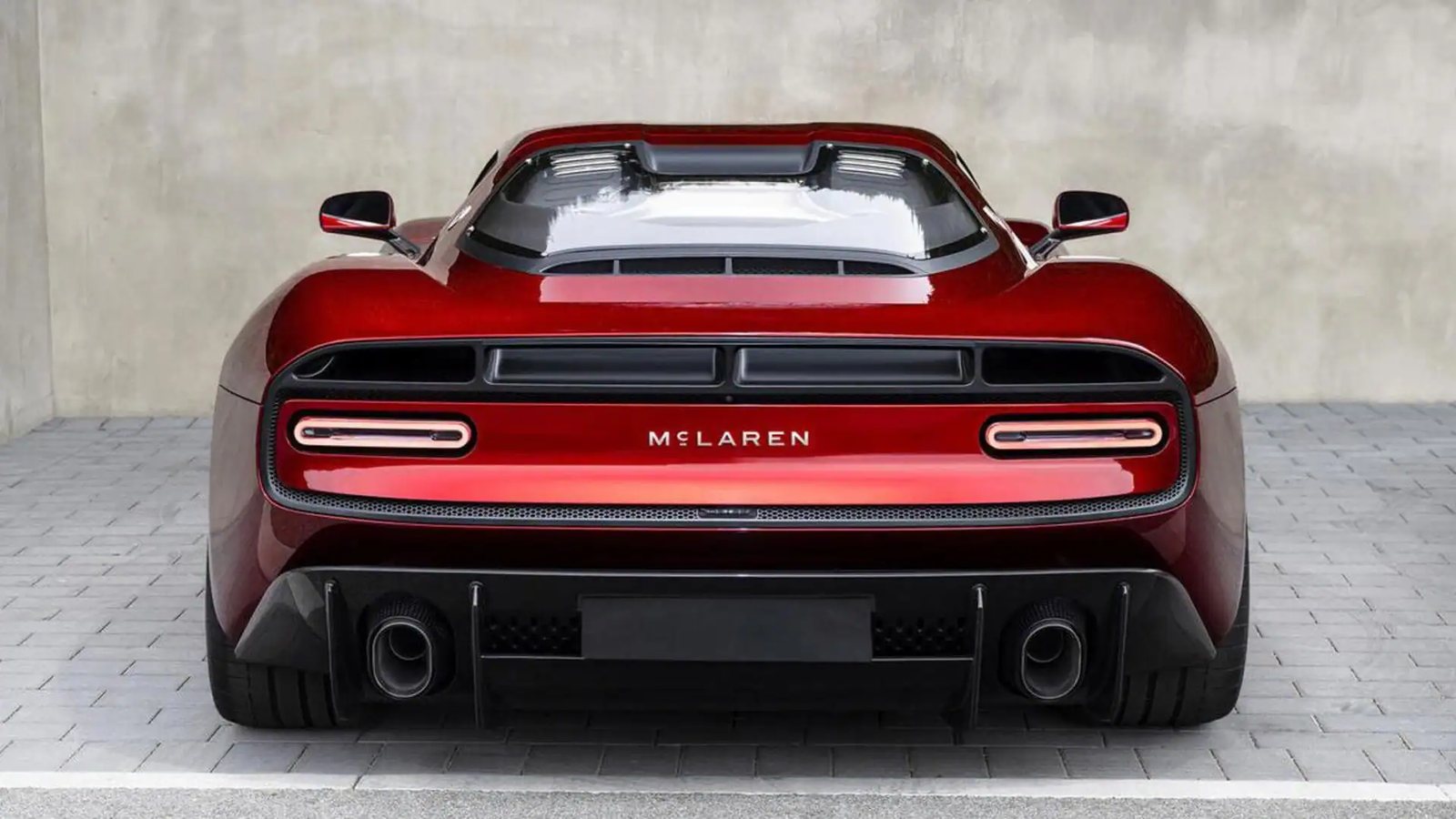
The McL 6GT, due in 2028.
The first car to wear the new name is the McL 6GT, a modern take on the M6GT that Bruce used as his own road car before he died in 1970. It's McLaren's first manual since the F1 and it's due in 2028, with the SUV after it.
A logo doesn't fill a gap in the lineup, and McLaren has a few years where that gap will be obvious. A company about to sell an SUV and offer a lot more customization to a wider group of buyers does need something to hold the brand together, though, and the founder's own garage is a better place to start than most.
The garage on Remuera Road is still standing. Heritage New Zealand listed it as a Category 1 historic place in 2006.